


🌟 Engineers: RSVP to our May 20th showcase in SF to meet breakout founders you can bet your career on
Something interesting showed up in the FYSK nominations this month. Some of the most compelling companies aren’t just based outside San Francisco — they’re building things that only make sense to operate outside it.
Here are a few that stood out:
Halter (Auckland) — solar-powered GPS collars that let ranchers herd cattle from their phones. It sounds like software until you realize the product lives on actual cows, across ranches in Texas, Colorado, New Zealand. This only works if you’re close to that world.
Starcloud (Redmond) — data centers in space. They’re putting NVIDIA H100s into orbit and used solar power and the vacuum of space for cooling. They moved to be near aerospace talent — the kind clustered around companies like SpaceX and Amazon — because that’s what the company actually depends on.
Mariana Minerals (US, distributed) — part software company, part real-world operation. Coordination might sit in SF. But mining, logistics, and processing happen across Texas, Utah, and North Dakota because that’s where the resources are.
At first we thought these nominations might be early signs of a geographical shift away from SF as the center of gravity. But the more we sat with it, the more it felt like something else entirely.
For a long time, the most valuable startups were pure software. So they clustered in SF where the talent, capital, and network all lived. That hasn’t changed. What has changed is that, for many startups, software is no longer the whole product. It’s now the layer you apply to the real world.
Which opens up a different kind of opportunity:
Some of the most valuable companies now come from combining software with the physical world — in areas the frontier labs aren’t going to touch anytime soon.
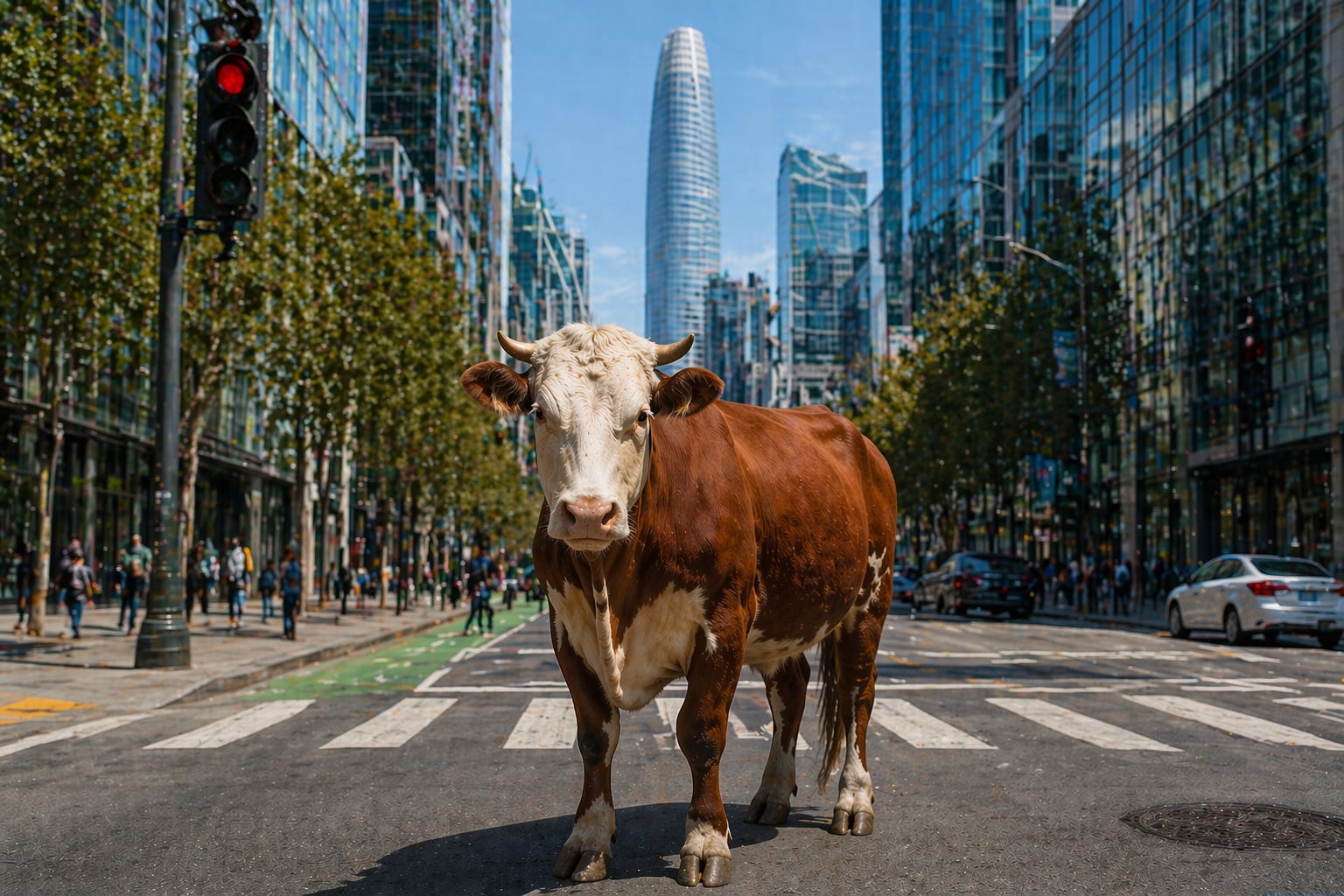
A small team can now coordinate complex, real-world systems like farms, energy, supply chains, and satellites without needing massive scale on day one. You don’t have to own everything. You can integrate, orchestrate, and iterate.
At the same time, AI tools make it possible to build from anywhere. You can build with models like Claude or Codex anywhere in the world. The ability to build great software used to be tightly clustered. Now it’s widely accessible.
So you get this split:
New capabilities are still created in places like SF
But the application of those capabilities is spreading outward
Many of the opportunities to solve problems in the physical world aren’t ones the frontier AI labs will pursue anytime soon. OpenAI and Anthropic are focused on building foundational models. They’re not running mining operations, managing cattle, or launching data centers in space. Which means there’s this growing set of problems that benefit enormously from modern software and AI, require deep engagement with the physical world, and are still wide open for startups. Not because they’re more “defensible,” but because they’re underserved and increasingly tractable.
There’s a talent shift happening too. SF is still unmatched if you want to work on foundational AI alongside world-class researchers, with the highest comp, at the center of it all. But not everyone wants to build at that layer. Some engineers are increasingly drawn to building things that interact with the real world — agriculture, energy, infrastructure, aerospace. Places where the problems are messier, but the impact is massive and tangible. Those opportunities don’t all live in one city.
So this isn’t “SF vs everywhere else.” SF is still the hub where companies get started, capital concentrates, and ideas collide. It’s where the foundations of AI are getting built, one model at a time. But once you start building something that touches the real world, the map expands, because the real world has geography. It has cows, energy sources, mines, factories, and launch sites. If you want to build something that actually serves those customers, you don’t start in SoMa. You start where they are.
If you’re building something outside SF — or watching something big take shape somewhere unexpected — we’d love to hear about it. We’re always looking for standout founders to feature at the next Founders You Should Know showcase.
Looking to join a high-impact, fast-growing startup? RSVP for our next showcase (yes, in SF!) — we scour the world to bring you the good stuff.
Encouraging