


🍽️ Want to meet Emma, and 3 other breakout founders, over dinner? RSVP for our February Dinner Series here.
The tech world is currently obsessed with a seductive idea: that software has become a commodity.
This narrative suggests that because an AI assistant can rebuild a SaaS tool over a weekend, the cost of software is racing toward zero. For lightweight apps and simple tools that might be true, but this narrative falters the moment it touches the systems that actually anchor the global economy.
Nobody is going to “vibe code” the system tasked with consolidating financial reporting across a hundred legal entities and disparate jurisdictions. You cannot simply prompt your way through the labyrinthine infrastructure that feeds into SEC filings and manages tax compliance across forty countries.
While software is undeniably getting easier to write, the sheer gravity of global commerce requires something more than a clever prompt. The world’s largest organizations do not run on weekend projects; they run on battle-tested, deeply integrated systems built for durability.
For the overwhelming majority of these giants, that system is SAP: a 300-million-line codebase that’s held market dominance for 5 decades.
In a field defined by rapid iteration, the rigid nature of the global enterprise represents the final, most difficult frontier. Emma Qian, founder of Nova Intelligence, saw this immutability as the ultimate opportunity.
How A DeepMind researcher landed on software from the 1970s
Emma wasn’t necessarily looking to work on legacy systems or enterprise software when she set out to build something new after stints in AI research at Google DeepMind and Meta; she was looking to build a durable company.
SAP processes 77% of the world’s business transactions, but the economics of working with it are challenging. For every dollar a company spends on SAP software, it spends roughly seven dollars on consultants.
Over decades, companies have layered millions of lines of custom code on top of SAP, often written by consultants who left years ago. Much of it is poorly documented and barely understood. Even simple changes can take months and cost millions.
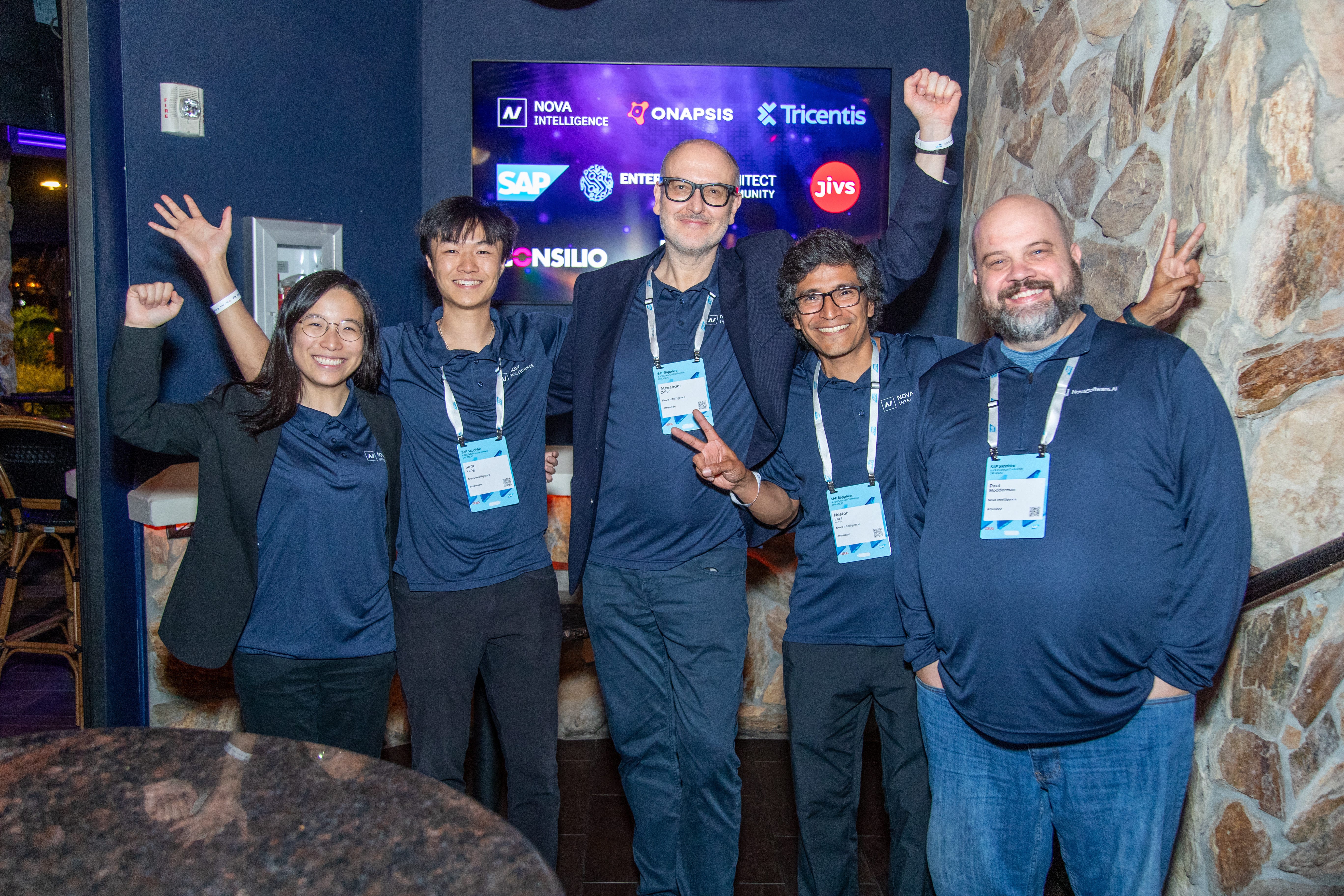
Emma saw an opportunity: the world’s most mission-critical software is trapped by broken economics and an unsolved technical debt. Alongside co-founder Sam Yang and Alexander Zeier—the co-inventor of SAP HANA—they decided to go after the problem head on.
What Nova is building
Nova Intelligence is what Emma describes as “Claude Code for SAP”: an agentic AI platform that radically accelerates how enterprises work with SAP.
I asked Emma a common question: why not build an AI-native ERP and replace SAP entirely?
“Big players have been trying to displace SAP for a long time. They haven’t been able to budge SAP at the top enterprises,” Emma says. “Even with SAP forcing everyone to migrate to S/4HANA by 2030, virtually no one is switching. Large enterprises are spending hundreds of millions on the process. For the segment we’re targeting, SAP isn’t going anywhere.”
The larger opportunity lies not in replacing SAP, but in making it work better. Early results have been dramatic: enterprises are compressing workflows that once took weeks into mere days. This potential has even caught the attention of SAP – their own venture arm is an investor in Nova.
Why SAP requires a purpose-built AI system
Building AI agents for SAP requires solving problems that simply don’t exist in modern software development. The challenge begins with ABAP, SAP’s proprietary language, which predates many of today’s programming paradigms.
In this environment, “code” doesn’t follow the traditional definition. Business logic is rarely confined to a clean script; instead, it is scattered across a complex web of ABAP programs, deep-layer configurations, workflows, and proprietary forms. Much of the system’s intelligence lives in artifacts that look nothing like traditional source code.
“We had to build a significant amount of custom infrastructure to make AI agents work well in the SAP environment,” Emma explains.
A team built for this problem
Solving this requires a rare intersection of talent: the ability to command cutting-edge AI while navigating decades of SAP complexity. To bridge that gap, Emma and Sam recruited Alexander Zeier, the co-inventor of SAP HANA and former CTO of Accenture’s SAP Business Group. They followed by bringing on Justin Kershaw, the former CIO of Cargill—one of SAP’s largest global customers.
“It’s an unusual blend,” Emma says. “We had to merge deep domain expertise with AI-native thinking.”
For co-founder Sam Yang, the appeal was the sheer difficulty of the task. “Emma is effectively the smartest person I know,” Yang says. “The SAP problem felt genuinely hard in a way most people aren’t willing to touch.”
“When we started Nova, it felt like we were getting punched in the face every day,” Yang adds. “But that friction is exactly how we built a platform that is now nearly impossible for anyone else to replicate.”
What’s next
When Emma speaks about the long-term vision, she isn’t just talking about software. She’s talking about a fundamental shift in how businesses operate.
Today, managing enterprise processes is a grueling, human-intensive endeavor. Simply understanding how a company’s own systems function—let alone changing them—requires armies of consultants and timelines that stretch from months into years. For the first time, AI offers a way for a company to truly “know” itself, providing the clarity needed to modernize and optimize operations in real time.
The ultimate goal is a layer of agents that proactively help companies run better. Achieving that would fundamentally rewrite the rules of global commerce.
Nova Intelligence is currently hiring engineers eager to tackle genuinely difficult technical problems within the infrastructure that powers the world’s largest companies.
If you are interested in building the future of the enterprise, reach out at contact@novaintelligence.com.