


Make eight fast choices, draw your engineering character card, and unlock the FYSK companies best matched to the way you build. Like Myers-Briggs (but way shorter!) the game takes about two minutes and reveals where you thrive, how you work, and the particular form of technical wizardry you bring to a team.
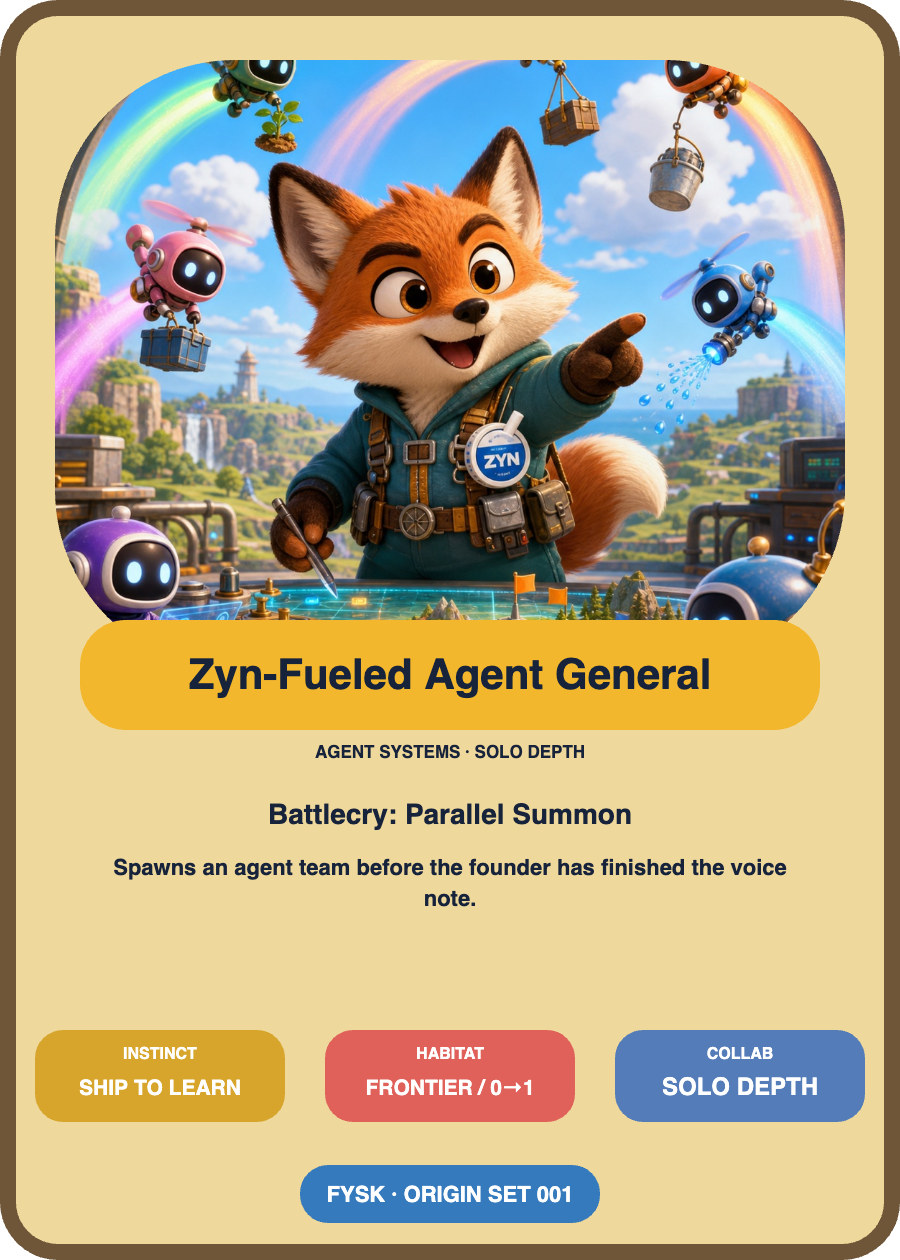
Your result comes with its own:
BUILD ENGINE
How you turn ideas into working things.
BATTLECRY
The phrase your coworkers have heard 4,000 times.
INSTINCT
What your brain does before the meeting has technically started.
HABITAT
The environment where your powers become most powerful.
Resist the urge to add this card to your LinkedIn certifications. Actually never mind…do it. LinkedIn could use some more adorable, colorful, magical animal cards!
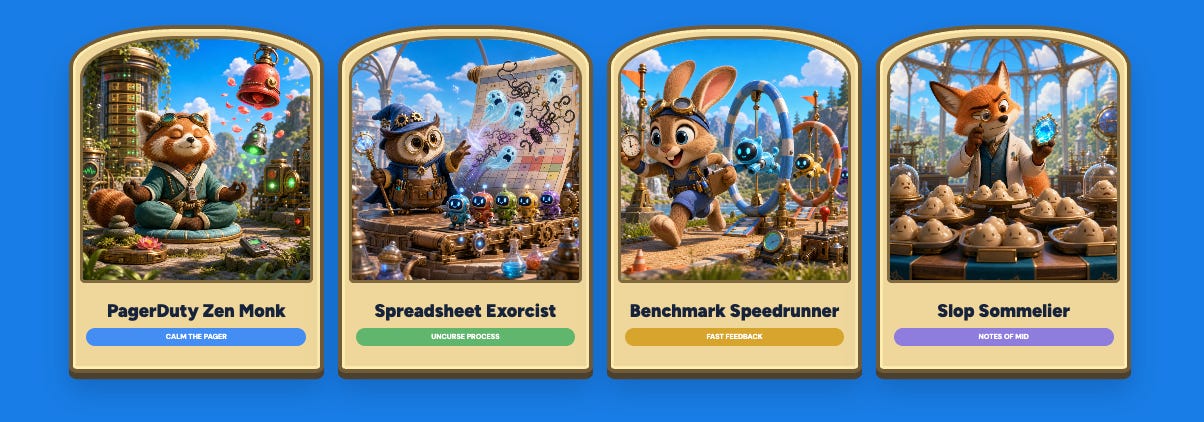
Once you’ve taken the quiz, we find your people
This is where the personality quiz develops a useful side quest. Your builder type, preferred industries, and ideal company culture are matched against every company that has presented at Founders You Should Know. Years of exceptional startups curated for you by one highly opinionated matchmaking machine.
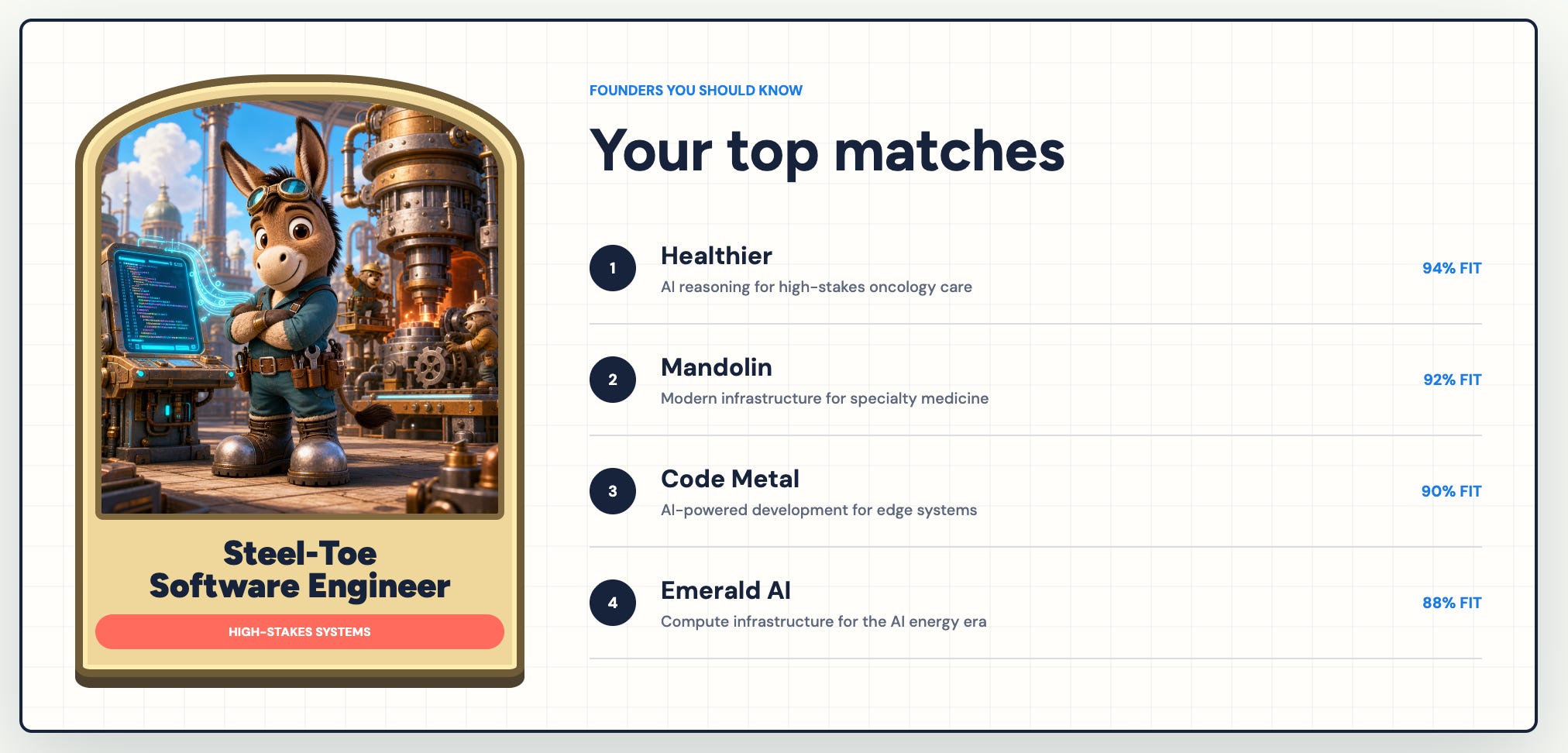
Unlock bespoke connections
When a match looks promising, ask FYSK for a private introduction. We’ll approach the founder, brag about you appropriately, and make the connection when there’s mutual interest. Learning that you are a highly evolved Infrastructure Beast is fun. But learning that your ideal team is already hiring is better.
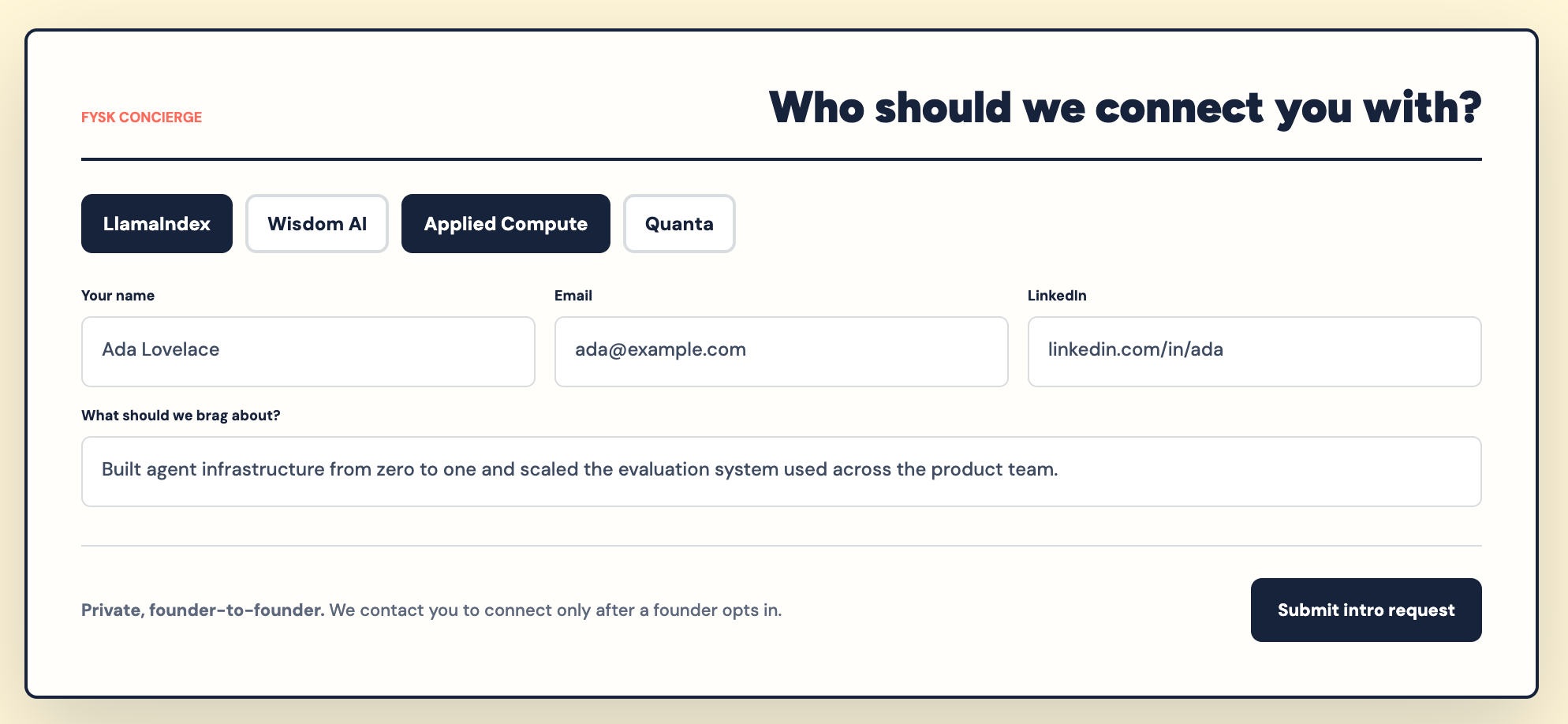
Get in on the magic
Discover your engineering personality. Meet the founders you should know.
This only takes two minutes — unless you attempt to reverse-engineer the scoring system—which would also tell us quite a lot about you.
Bonus content: notes from my very first vibe-coded project!
This was my first time vibecoding and deploying an actual product. I know almost nothing about engineering, which made the process feel equal parts magical and frustrating. It reminded me of baking—an activity I do not love. There’s room to be creative, but getting anything into production requires following a long list of very exact instructions. Miss one step, and the whole thing refuses to rise. Except instead of a sunken cake, you get a 404.
A few things I learned:
The artwork needed an actual design system.
The first versions were all over the place, so I had to define a proper design file and keep refining it until the cards finally looked like they belonged in the same universe.
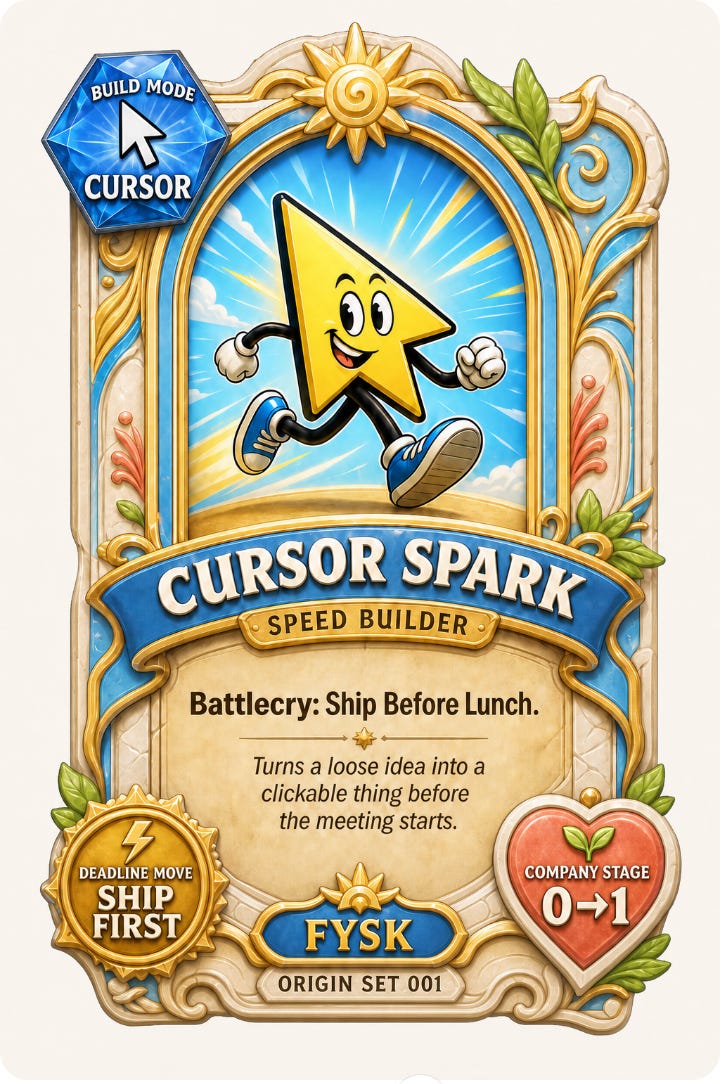
Ugh, ugly v1, or v25…
“Every FYSK company” turned out to require some human judgment.
The original database included companies that had been acquired or shut down. I asked Codex to scour public websites for a first pass, then manually reviewed and removed the ones that should no longer appear in the matches.
AI loves putting too much text on the cards.
Early versions were crowded, distracting, and full of lines no human would actually say. A large portion of the work was deleting things, simplifying the layout, and rewriting copy until it sounded like a person instead of a very enthusiastic machine.
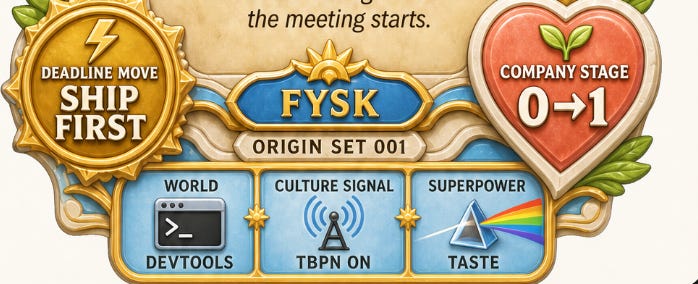
What does the text in the little box windows even mean?
The badges took forever.
Getting them to feel culturally relevant, funny, distinctive, and actually connected to each engineering personality required many, many iterations. Apparently “make it cooler” is not a complete creative brief, despite my repeated attempts to make it one.
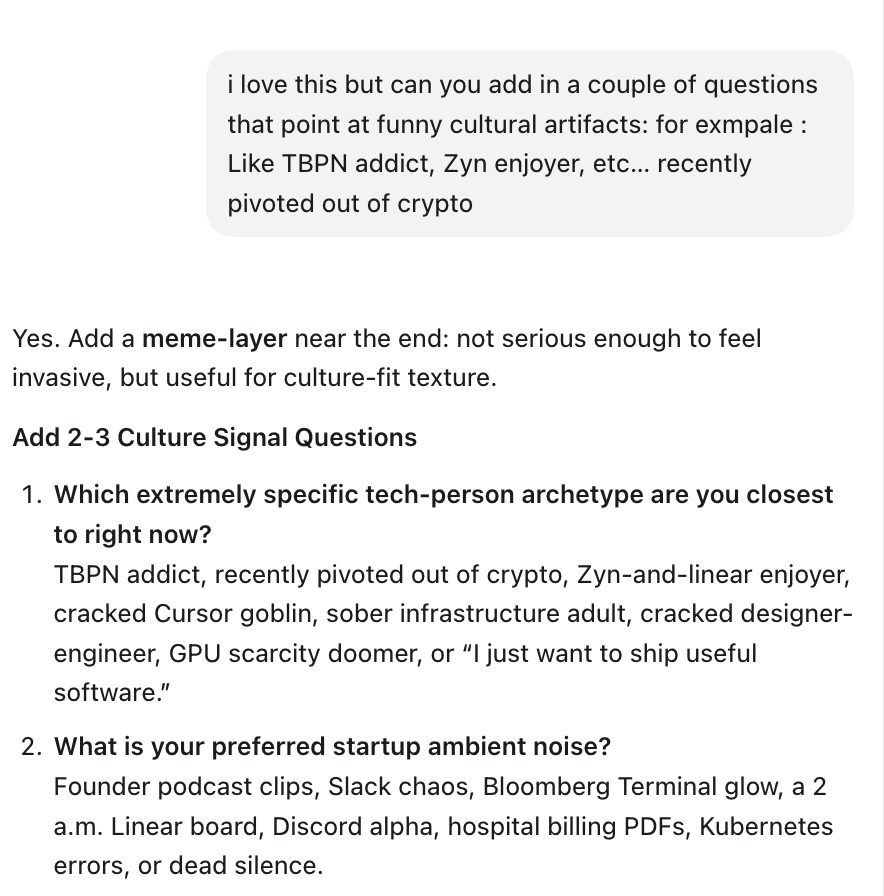
Deploying the game was the hardest part.
Because I had no idea what I was doing, I initially asked for the simplest possible setup and was guided toward Netlify with a private Airtable handling the backend storage.
Then the human in the loop—my husband, a seasoned vibecoder—suggested GitHub, Vercel, and Supabase instead.
What followed was a painstaking sequence of instructions, failed steps, screenshots uploaded to Codex, revised instructions, more screenshots, more revised instructions, and several moments where every button on the internet appeared to be in the wrong place.
Eventually, it worked (mostly!)
There are still bugs. Please report them (seriously!) Finding a bug is now part of the game.
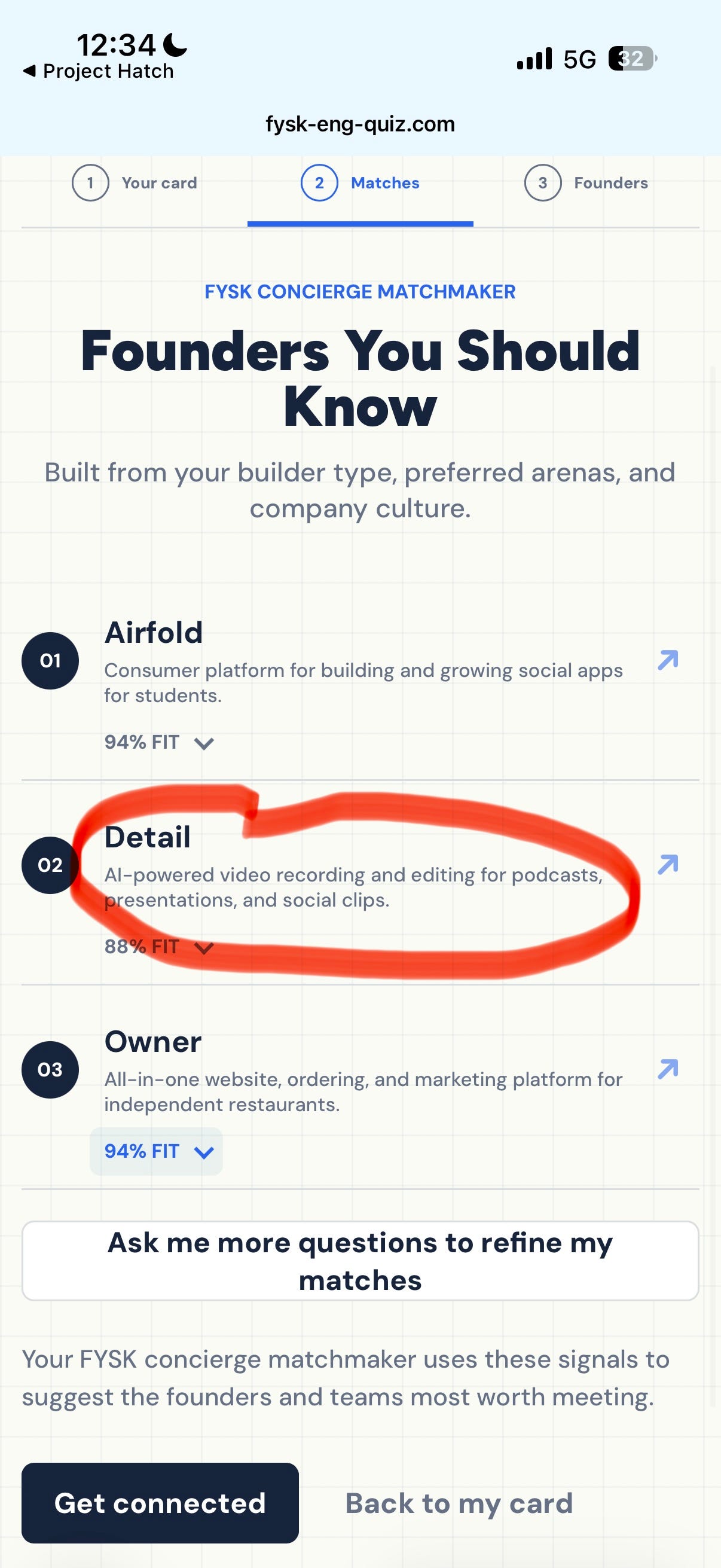
Not the right Detail! Ironically we could use Detail to find the bugs…
Neat idea, Jen...can't wait to see what you build next!